Independent cruise travel guide

Dining at Sea

Dining at sea can range from scheduled restaurant meals to quick poolside options, yet the mix of venues, charges and booking rules varies between ships, fares and voyages. This practical guide helps first-time and returning cruisers compare the common formats without treating any inclusion as a promise. Voyage Portals is independent: we are not a cruise line or booking operator.

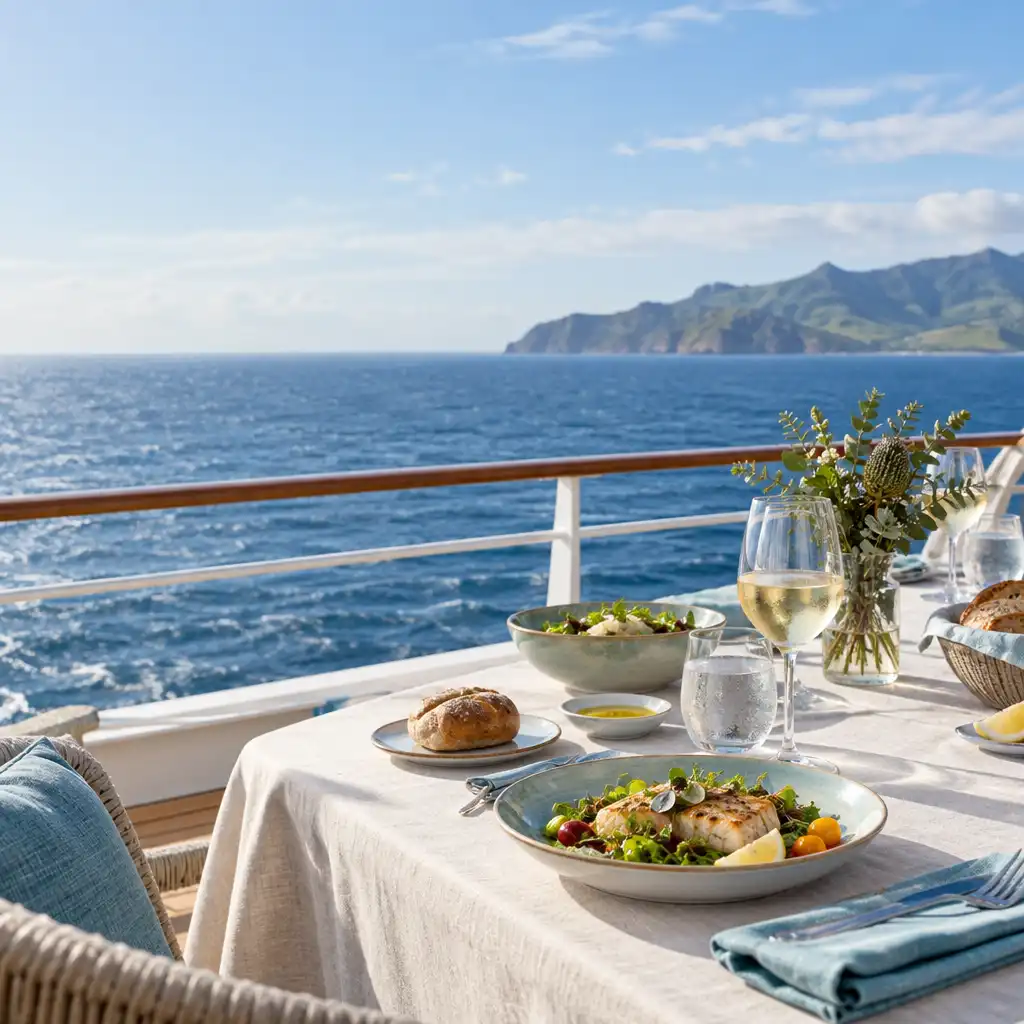
Open-deck dining table with ocean and a distant coastal headland beyond the ship rail
A relaxed onboard table setting; venue arrangements vary by ship and sailing.
⌁ Editorial guidance

Sit-down dining: main, casual and speciality

Restaurant-style venues can look similar in a brochure but work quite differently once you consider timing, service and current terms. Compare the experience you want with the questions each format raises.

Main Dining Room

The Main Dining Room is generally the ship’s central sit-down meal setting, where service style, seating arrangements and dining times can matter as much as the menu. Some sailings may use set dining, while others may offer more flexible concepts; ask which approach applies to your fare and departure. Confirm whether you select a time, may request a table preference or could share a table. Dress expectations and menu rotation can also vary by cruise line, ship and evening.

Questions to ask: How are dining times, seating and evening guidance handled?

Use the comparison checklist
⌁ Editorial guidance

Casual Dining

Casual dining usually describes relaxed sit-down or counter-service options outside the formal main restaurant. It can suit a lower-key evening, a family routine or a port-day schedule, but venue names, operating hours and whether food carries an extra charge differ. When comparing ships, check the venue location, seating style and cuisine, as well as whether reservations are used. Treat “casual” as a description of atmosphere, not a reliable signal of inclusion or availability.

Questions to ask: What is open when you are likely to want it, and what terms apply?

Use the comparison checklist
◆ Check current terms

Speciality Restaurants

Speciality restaurants are typically distinguished by cuisine, atmosphere or service level. They may involve a cover charge, à la carte pricing, a package allowance or another rule set, but they are not always extra-cost. Compare what any charge covers, whether gratuities are included, the cancellation terms and the booking window. Current menus and terms from the operator are more useful than assumptions based on a venue category, particularly if a dining occasion is important to your plans.

Questions to ask: What is covered, when can it be reserved and what happens if plans change?

Use the comparison checklist
Everyday rhythms

Flexible food through the day

When you do not want a scheduled restaurant meal, the practical details become especially important: where a venue is, when it opens and how it fits around a day ashore or on deck.

Buffet

A buffet can provide a flexible way to choose from multiple dishes at meal times, though service format, opening hours, crowd levels and inclusions differ between ships. Some ships may use staff service or other hygiene procedures rather than a conventional self-serve arrangement. If flexibility matters, check peak-time patterns, seating availability and whether a particular meal period runs every day. A quieter visit may suit travellers who prefer a less rushed routine.

Ask: Which meal periods operate, and how busy can they be?

Cafés

Cafés can be useful for coffee, pastries, light bites or a quieter pause, but beverage brands, food availability and charges are highly ship-specific. Distinguish any basic complimentary option from branded or premium drinks where relevant rather than assuming they are treated alike. It is also useful to check opening hours around early shore-excursion starts and sea days, especially if coffee or a light breakfast is part of your routine.

Check: Opening hours, drink treatment and what food is actually offered.

Room Service

Room service may suit an early departure, a rest between activities or a private meal, but menus, service windows, delivery charges and ordering methods can vary substantially. Ask whether particular items, delivery or late-night service carry charges. Where operators specify it, the menu or availability can differ by cabin category or fare. Do not assume room service is available, free or offered around the clock on every ship.

Confirm: Menu, ordering method, delivery terms and current hours.

Poolside Food

Poolside food can make a day outdoors simpler when travellers prefer a casual lunch between activities. Weather, deck access, opening hours and menus affect what is actually offered. Check whether an outdoor venue operates on port days and whether seating is shaded or limited if that matters to you. Think of it as a useful daily-routine option rather than a guaranteed amenity or a promise of a particular food type.

Ask: When does it operate, and what does the outdoor setup feel like?

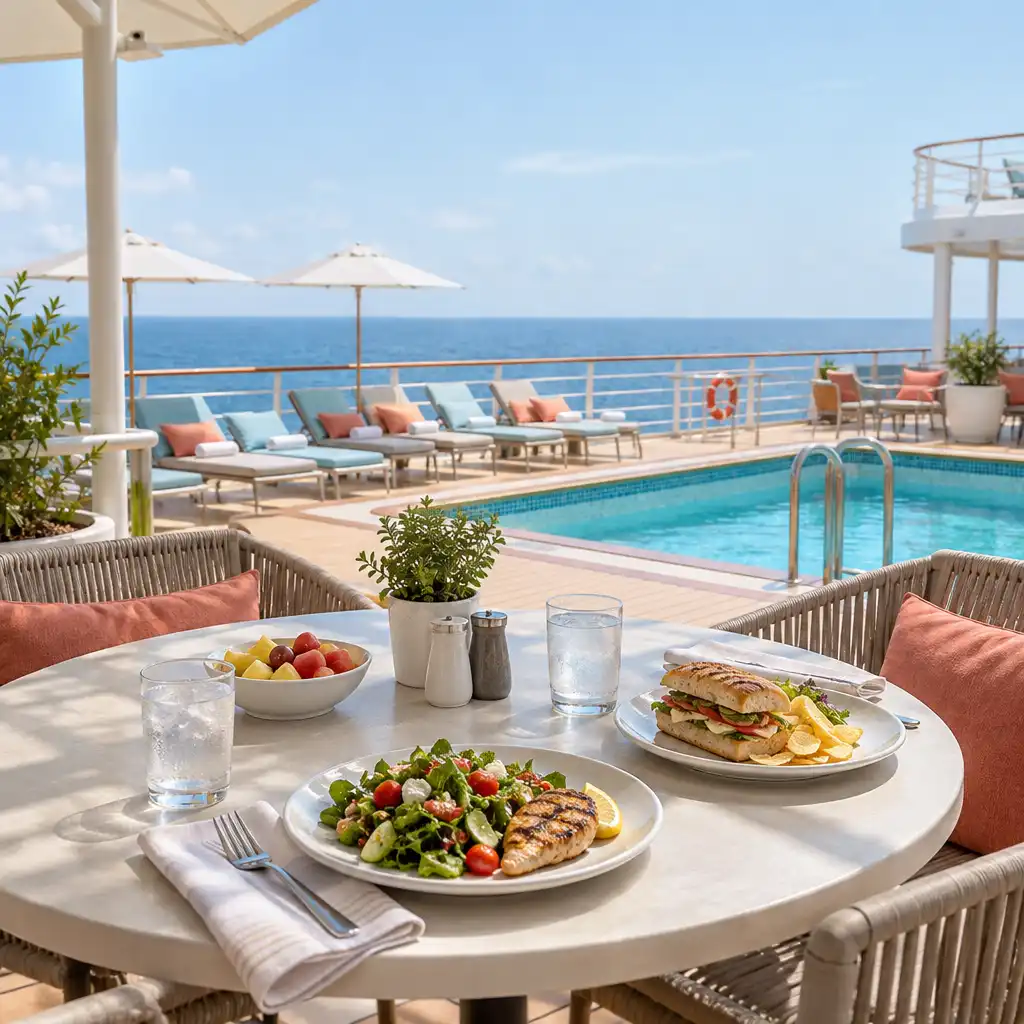
Shaded pool-deck table set for a casual lunch with sea visible beyond
A non-specific outdoor dining setting; menus and operating times vary.
Evening planning

Bars and lounges: drinks, atmosphere and spending

Bars and lounges are often social spaces rather than full restaurants, with their own atmosphere, entertainment proximity, opening times and food options where offered. Some may serve snacks or light food, while others focus on beverages. Consider the noise level, location and style of evening you enjoy rather than assuming every lounge offers the same experience. Facilities and opening arrangements can change, so current ship information matters.

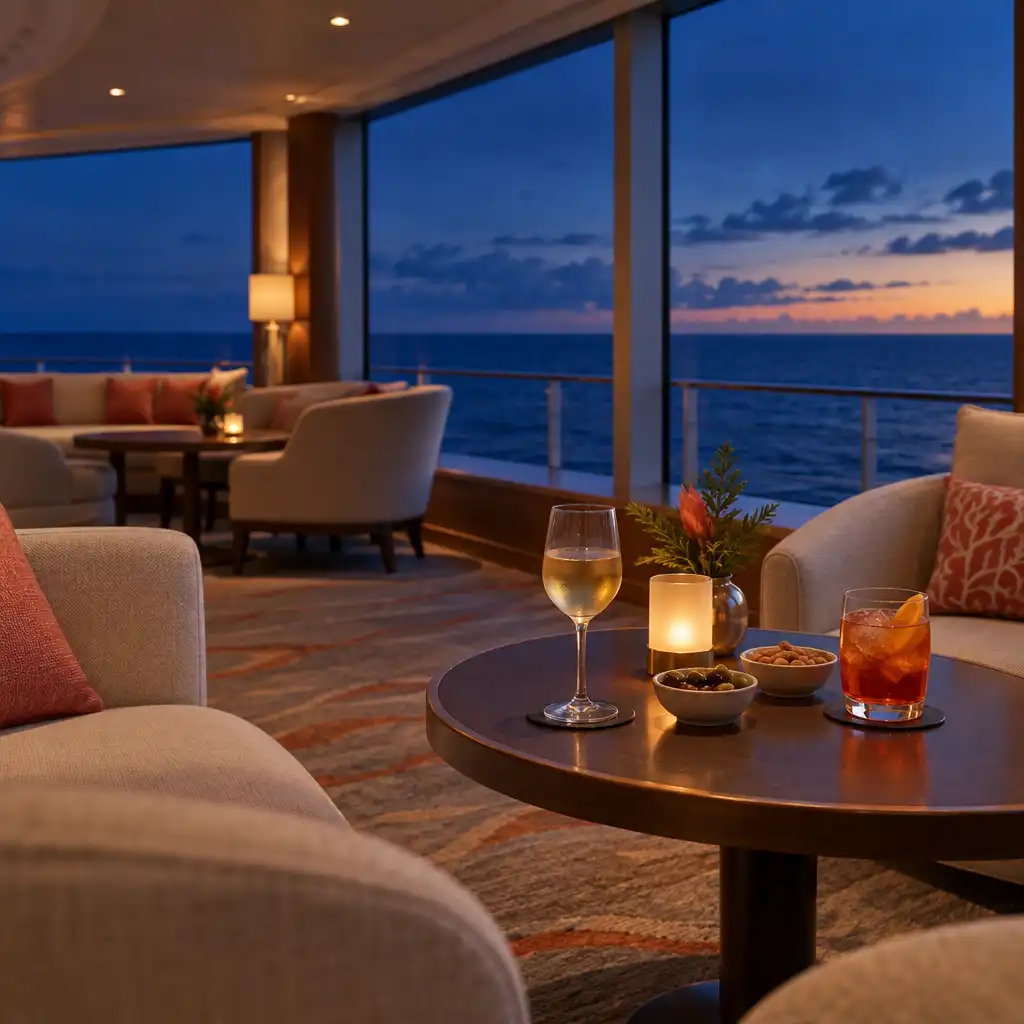
Quiet cruise lounge seating and a small table beside windows looking onto a twilight ocean
A calm lounge atmosphere, not a representation of a named operator.
⌁ Planning guidance

How to assess a drinks package

A drinks package is not automatically good value. Start with its current written terms: eligible drinks, exclusions, service charges, daily limits if any, and whether everyone in a cabin must participate where relevant. Compare those terms with your likely onboard preferences instead of a general impression of what is included. Check non-alcoholic drinks, coffee, bottled water and minibar treatment separately; coverage may not be the same. If you make your own budget notes, use NZD for illustrative planning, not as a claim about operator pricing.

Cruise schedules, ship facilities, prices, itineraries and inclusions can change. Travellers should confirm current information directly with the cruise line or authorised travel provider before booking.

⌁ Editorial guidance

Reservations, dining times and dress expectations

Food may be excellent, yet the operational detail can still shape your evening. These three steps help turn broad dining descriptions into useful questions for your chosen sailing.

1

Reservations

Reservation needs can differ between main dining formats, speciality restaurants and popular time slots. Ask what can be arranged before sailing and what opens once onboard. Look for booking windows, cancellation rules and party-size conditions, particularly if shore-excursion timing could affect your preferred dinner. No particular venue should be assumed to require a reservation; policies are operator-specific and can change.

2

Dining times and table preferences

Some cruises may offer assigned or selectable dining times, while others use different approaches. Confirm how seating, wait times and table requests are handled for your chosen sailing. Think about early excursions, children’s routines, performance plans and your preferred social pace. A request for a private table, a fixed time or flexible access is a preference, not a guarantee, until the operator confirms it.

3

Dress expectations

Dress expectations can range from relaxed daytime wear to more polished evening guidance, with special events or venue-specific rules possible. Review the cruise line’s current guest information for dining rooms and speciality venues rather than packing for an assumed standard. This gives you room to organise your favourite evening outfits while keeping plans practical for the actual ship, voyage and venues you intend to use.

Careful preparation

Dietary needs and personal dining requests

Travellers with dietary needs, allergies, intolerances, cultural preferences or other meal-related requests should seek current guidance from the cruise line or authorised travel provider before booking and again before travel where instructed. Communicate clearly in writing and ask what can be accommodated on the specific sailing. This guide cannot confirm that a ship can safely meet a particular requirement, and it does not provide personalised medical advice.

⌁ Editorial guidance — confirm for your sailing

Questions worth confirming

  • Is pre-travel notification required, and how should it be recorded?
  • What onboard confirmation steps are expected after embarkation?
  • Which venues and meal times can discuss the request?
  • What current information is available about menus and cross-contact?
  • What are the limits of what staff can guarantee on this voyage?

Voyage Portals helps visitors ask better questions, but only the operator or authorised provider can confirm arrangements for a specific ship and departure. Use the final checklist when comparing options.

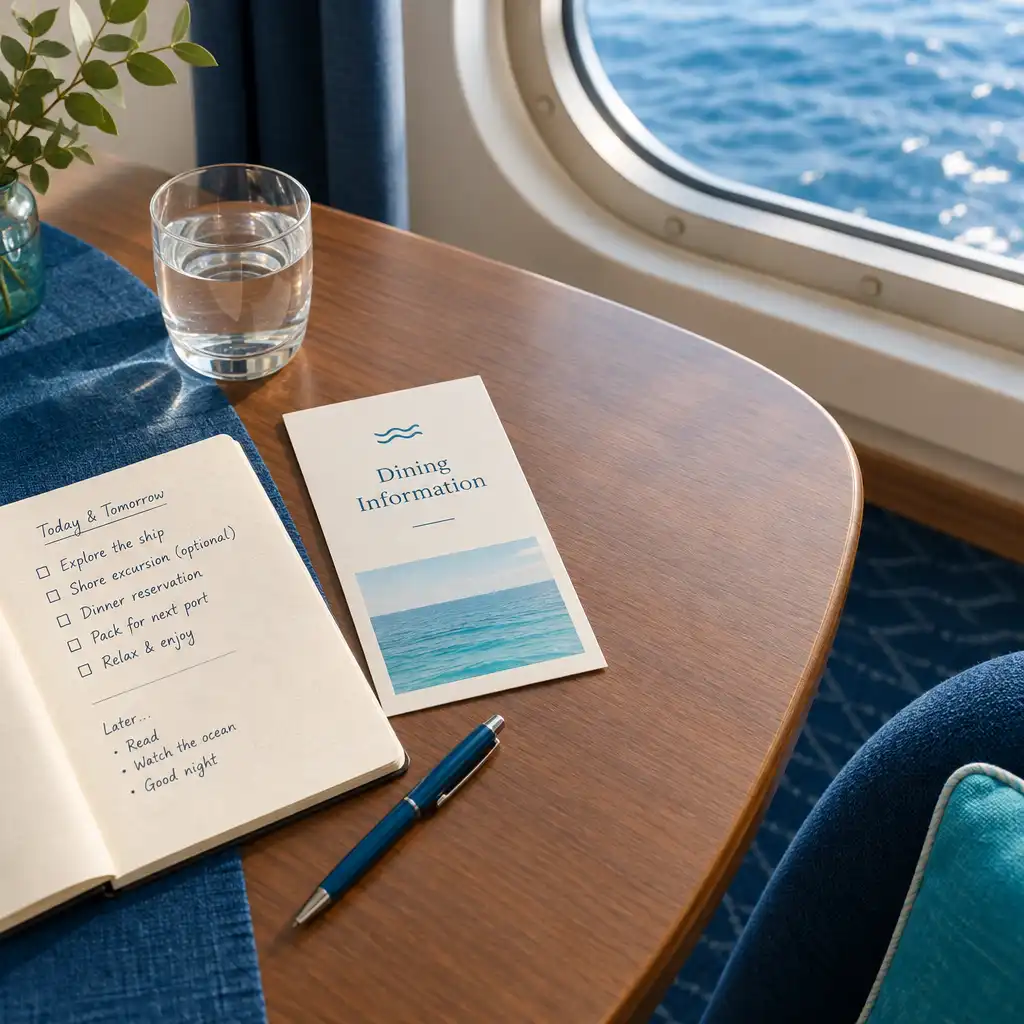
Planning note, pen and glass of water on a quiet table near softly blurred sea light
Preparation supports a clearer conversation; it is not an assurance of accommodation.
⌁ Editorial guidance

Included, extra-cost and the details between

Dining arrangements can depend on fare type, cabin category, promotional terms, venue, time of day and the cruise line’s current policy. An “included” label is most useful when you read its conditions. Extra cost can mean a cover charge, à la carte menu, service charge, package rule or another arrangement, so general categories should never replace confirmation for the exact cruise.

⌁ May be covered — confirm terms

Potentially included or fare-linked items

Some fares may include selected dining access or meal occasions, but check the exact venue list, food exclusions, dining-time rules and whether beverages are treated separately. Useful prompts are: Which venues? Which meals? What is excluded? Does the fare type matter? Conditional wording is not evasive here; it is the clearest way to compare current terms without assuming a category belongs on one side.

◆ Check current terms

Potentially extra-cost items

Some experiences may attract additional charges, particularly when they involve specialised service, particular menu items, premium beverages, deliveries or optional packages. The current terms determine the actual position. Ask whether pricing is a cover charge or per item, whether gratuities or applicable taxes are addressed, what cancellation terms apply and whether any package has eligibility rules. Do not assume speciality dining, room service or drinks packages always cost extra.

✓ Verified ship information

What verified ship information should show

When Voyage Portals presents sourced information for a specific ship in future, it will identify the ship, source context, update date where available and a reminder to confirm current details. This page offers general editorial guidance rather than a populated ship comparison.

Ship
Shown when sourced
Source context
Shown when available
Update date
Shown when available
Your research station

A dining comparison checklist for your sailing

Use these prompts while reviewing current operator information for the exact ship, fare and voyage you are considering.

Compare the daily dining rhythm

Check what venues are available at the meal times that matter to you, how formal or flexible the main restaurant is, and whether preferred options fit port-day plans.

  • What are the current dining times?
  • When do reservations open?
  • How are queues or waits handled?
  • What casual alternatives operate nearby?

Compare likely extras

Review current terms for speciality dining, drinks, café items, room service, gratuities or other charges that may apply, and understand what each fare or package actually covers.

  • Could there be a cover charge or item pricing?
  • Are gratuities addressed in the terms?
  • What may a package exclude?
  • Which details need an NZD planning note?

Compare personal fit

Consider dietary communication, social preferences, preferred noise level, daytime routine and whether a private, shared, quick or occasion-style meal matters most.

  • What dining pace suits your plans?
  • Would you prefer shared or private seating?
  • Which requests need written confirmation?
  • What atmosphere feels most comfortable?

Independent planning reminder

Voyage Portals helps travellers understand the questions. It does not sell cruises or confirm operator arrangements for a particular sailing. A cruise line or authorised travel provider is the appropriate source for current booking-related details.

Explore cruises

Continue planning your cruise

Dining choices make more sense alongside cabin and onboard-life planning, especially when you are comparing how you want to spend sea days and evenings.