INDEPENDENT CRUISE TRAVEL GUIDE

Cruise Cabins Explained

A cruise cabin is more than a bed for the night. Its type, position and features can shape your daylight, privacy, comfort and budget. This practical guide helps New Zealand travellers compare the broad options, while recognising that cabin names, layouts and details vary between ships.

Voyage Portals is an independent New Zealand travel information website, not a cruise line or booking operator.

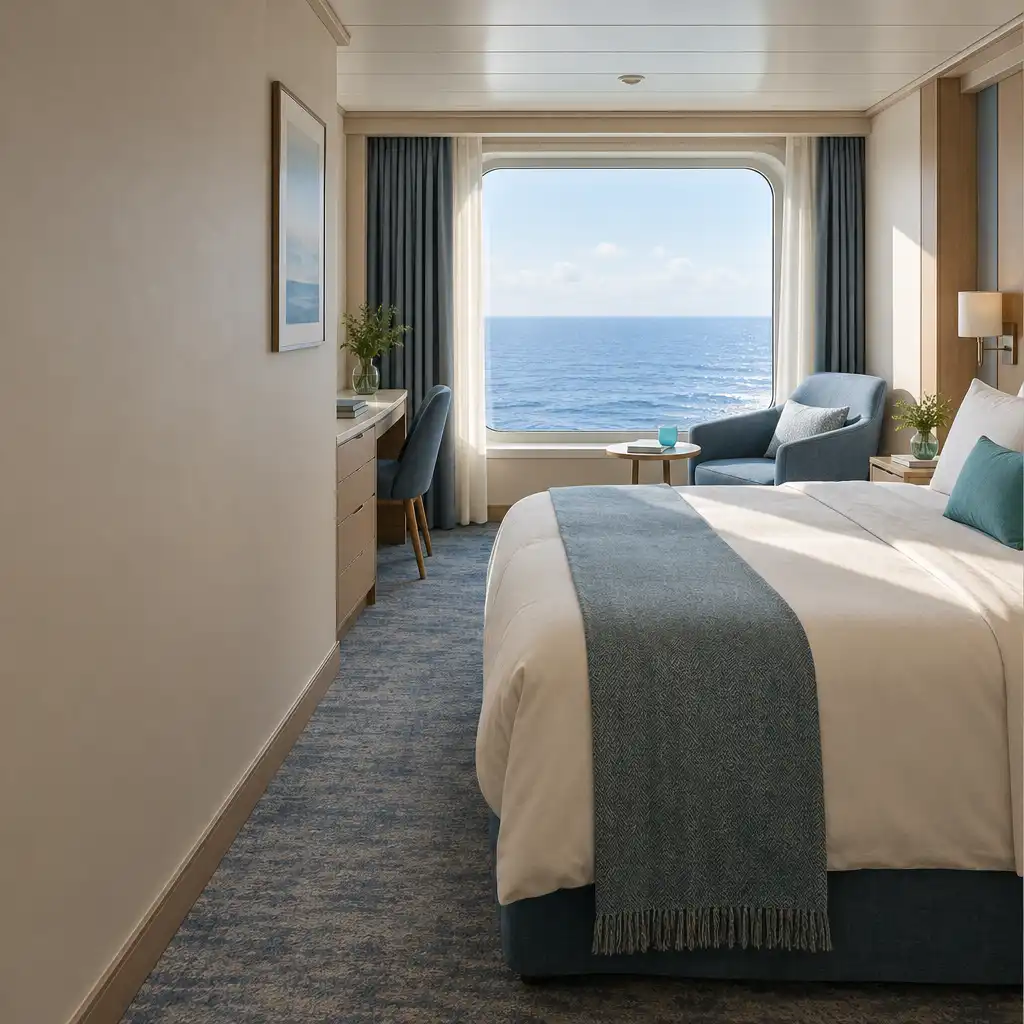
Calm contemporary cruise cabin with a neatly made bed beside an ocean-facing window
An inviting cabin setting, shown for planning context rather than as a specific ship or cabin category.

Planning guidance

Start with what matters to you

There is no universally best cabin. Before comparing labels, decide which trade-offs will matter most during your own voyage: how you expect to use the room, how easily you want to move around the ship, and who will share the space.

Editorial guidance

Your daylight and private-space preference

Some travellers use the cabin mainly for sleep, while others value time by a window or on their own outdoor space. Interior cabins usually have no exterior window, whereas a balcony cabin has a private outdoor balcony. Shared decks can still offer time outside, so consider what you will genuinely use rather than assuming a feature matters equally to everyone.

Editorial guidance

Your comfort and location priorities

Location can influence walking distance, perceived movement and potential activity nearby, depending on the ship and the individual cabin. Check the deck plan for public spaces, service areas and lift banks around a shortlisted room. The location guide explains the questions worth asking without making universal promises about quietness or motion.

Editorial guidance

Your budget and travelling party

Cabin choice sits alongside your overall budget and the arrangement you need. Bed layouts, extra sleeping arrangements, connecting cabins and accessible features can all vary. Current prices and inclusions should be confirmed with the cruise line or authorised travel provider, and connecting or accessible options should be checked for the selected ship and sailing.

Editorial guidance

The four main cabin categories

These broad labels are useful starting points, not standardised floorplans. A chosen ship’s cabin description and deck plan remain the best place to understand the exact room, sleeping arrangement, outlook and nearby spaces.

Interior cabin

An Interior Cabin usually has no exterior window. It can suit travellers who place more value on the itinerary, onboard time or budget flexibility than on a view from the room. The category alone does not reveal a standard size, bed arrangement or location: layouts and sleeping arrangements depend on the ship and cruise line.

What to confirm

Check the selected cabin’s layout, bed configuration and position on the deck plan.

Oceanview cabin

An Oceanview Cabin includes a window or porthole depending on the ship, bringing natural light into the room. Window shape, position and outlook are not uniform; some views may need to be checked for the selected cabin. An oceanview cabin is distinct from a cabin with a private balcony, and a window should not be assumed to open.

What to confirm

Review the window or porthole description and any stated view obstruction.

Balcony cabin

A Balcony Cabin has a private outdoor balcony. It may appeal if fresh air, a personal outdoor area or time outside without using a shared deck matters to you. Balcony size, furniture, privacy, shelter and outlook can differ by ship and position, so review the cabin description and deck plan rather than expecting a consistent experience.

What to confirm

Check balcony position, outlook and any notes about exposure or nearby activity.

Premium reference

Suite

A Suite generally offers more space and potentially additional amenities depending on the cruise line. Definitions differ substantially among cruise lines and ships, so a suite name does not by itself confirm layout, service, dining access or inclusions. Confirm the exact amenities, room arrangement and current fare conditions for the selected sailing.

What to confirm

Compare the stated amenities and inclusions with the current fare terms.

Practical comparison

Compare what changes your experience

Category names offer a useful shorthand, but the everyday experience comes from the selected room, its position and the fare conditions attached to it.

ConsiderationInteriorOceanviewBalconySuite

Space, layout and sleeping arrangements

Varies by selected cabin.

Varies by selected cabin.

Varies by selected cabin.

Definitions and layouts vary widely.

Available floor space, storage, bathroom arrangement and bed configuration can differ within the same broad category, depending on the ship. Inspect the chosen ship’s deck plan and cabin description: a category label alone may not reveal every layout detail.

Natural light, outlook and privacy

Usually no exterior window.

Window or porthole, depending on ship.

Private outdoor balcony.

Varies; do not assume a balcony.

Outlook and privacy can vary by cabin position. A balcony means private outdoor space, not a promise of uninterrupted privacy or a particular view. Oceanview views likewise need checking for the individual cabin.

Location, noise and motion considerations

Check the specific position.

Check the specific position.

Check deck and balcony location.

Check the actual suite location.

Proximity to public spaces, service areas, lifts, restaurants, theatres, pool decks, the engine area and the ship’s ends may matter, depending on the ship and cabin. Treat noise and motion as factors to investigate, not guarantees. Read the location guidance.

Price positioning and inclusions

Compare current fare terms.

Compare current fare terms.

Compare current fare terms.

Benefits may vary by cruise line.

Cabin categories are often positioned differently in a fare structure, but exact pricing, benefits and inclusions are ship- and sailing-specific and can change. Compare the full fare terms, not only the cabin name, and confirm current information directly with the cruise line or authorised travel provider before booking.

Space, layout and sleeping arrangements

Interior: layout varies by selected cabin.

Oceanview: layout varies by selected cabin.

Balcony: layout varies by selected cabin.

Suite: definitions and layouts vary widely.

Check the chosen ship’s cabin description and deck plan; category names do not reveal every detail.

Natural light, outlook and privacy

Interior: usually no exterior window.

Oceanview: a window or porthole depending on the ship.

Balcony: a private outdoor balcony.

Suite: outlook and outdoor space vary.

Individual outlook, privacy and any obstruction should be checked for the selected cabin.

Location, noise and motion considerations

All categories can sit in different positions. Review nearby venues, service areas, lifts and the ship’s ends depending on the ship. Noise and perceived motion are considerations, not promises.

Price positioning and inclusions

Current prices, benefits and inclusions can change. Compare full fare terms and confirm them with the cruise line or authorised travel provider before booking.

Planning guidance

Where your cabin is located matters

Two cabins in the same category can feel quite different because of their deck, orientation and distance from shared spaces. Use the selected ship’s deck plan to consider walking distance, nearby activity and ship position, remembering that the implications depend on the ship and the individual cabin.

Scroll to view ship positions

MIDSHIP

Some travellers consider a central position when they prefer a cabin away from either end of the ship. Perceived motion and convenience still depend on the ship and cabin, so check nearby lifts and public venues.

FORWARD

Forward cabins may place you closer to particular ship areas or views. Check walking distances, adjacent public spaces and service areas on the selected deck plan.

AFT

Aft cabins can also be close to particular areas or views. Review the actual deck plan rather than assuming a universal pattern for activity, exposure or motion.

HIGH DECK

Higher decks change the relationship to upper-deck venues, restaurants, theatres, pool areas and lifts. Nearby spaces differ between ships.

LOWER DECK

Lower decks can change lift and stair travel, embarkation routes and proximity to lower-deck areas. Consider engine or service-area context without treating noise as a certainty.

Editorial guidance

How to choose a cabin

Use this route from broad preference to selected-ship verification. It is a practical process, not a formula for one correct cabin.

1

Decide what you want from time in the cabin

Prioritise sleep, daylight, private outdoor space, extra room, a view or simply a practical base between ports and onboard activities. A cabin’s role may differ on a port-intensive itinerary and on sea-day-heavy travel, so make a personal list before connecting those preferences to the broad cabin categories.

2

Read the deck plan around the cabin

Check what sits above, below and beside a prospective cabin. Consider lifts, restaurants, theatres, pool decks, service areas and other public spaces where relevant, as well as walking distance. These areas do not always create noise, but the actual selected ship’s plan provides useful context.

3

Consider motion and noise sensitivity

If you are concerned about perceived movement or nearby activity, use cabin position as one consideration while recognising that sea conditions, ship design and surroundings vary depending on the ship. This is not medical advice; personal health concerns are best discussed with an appropriate professional.

4

Confirm for your ship

Check who is sharing the space

Families, friends and couples should examine bed configurations, connecting-cabin availability and accessibility needs for the specific ship and sailing. Connecting cabins are not automatic, and accessible features vary. Confirm current availability directly with the cruise line or authorised travel provider.

5

Compare the full cabin description, not just the name

Check category wording, location, possible obstructions, amenities, inclusions and fare conditions before deciding. Suite benefits and cabin details vary by cruise line. Voyage Portals cannot verify a live selection, so use current official information and provider confirmation before booking.

Check current ship information

Cabin details worth confirming

What a cabin name may not tell you

A broad category name can leave important details unresolved, including exact layout, outlook, bed arrangement, balcony size, nearby spaces and accessible features. Treat cabin numbers and category labels as starting points, then check them against current official material for the selected ship. Cabin layouts and details vary by ship and cruise line, so no general guide can replace a current cabin description and deck plan.

Cruise schedules, ship facilities, prices, itineraries and inclusions can change. Travellers should confirm current information directly with the cruise line or authorised travel provider before booking.

Editorial scenarios

Cabin planning scenarios

Use these examples as prompts for better questions, not as a recommendation engine.

Editorial scenario

First-time cruisers seeking a simple base

Start by understanding the difference between no exterior window, a window or porthole, and a private balcony. Then decide how much cabin time matters to you. An interior cabin is not automatically the right value choice; after selecting a broad category, compare the actual location and cabin description.

Review cabin categories →

Editorial scenario

Travellers prioritising ease around the ship

Mobility, routine or convenience considerations can make deck position, lift distance, venues, accessible features and route complexity worth investigating. Do not assume a particular deck is best. Accessible cabin features and practical proximity depend on the ship, so confirm them for the actual sailing.

Review location guidance →

Final research aid

Use this checklist before you decide

Take these questions into your own ship and cabin research. They help you compare like with like without suggesting that any answer guarantees a particular experience.

A considered choice

Choose the cabin you will use

Cabin category and location work together. The useful choice is the one that matches how you expect to rest, get around the ship and spend time at sea, after current selected-ship details are checked. There is no universal best category or location. Voyage Portals is independent and not a cruise line or booking operator.